Cavalier King Charles Spaniel
A silky-coated toy spaniel that pairs true lapdog devotion with the playful heart of a sporting dog.
About the Cavalier King Charles Spaniel
The Cavalier King Charles Spaniel carries one of the most royal pedigrees in the dog world. Small toy spaniels were the favored companions of English nobility for centuries, but they are most closely tied to King Charles II, who reigned during the Restoration and was said to be rarely seen without a pack of these little dogs at his heels. The breed takes its name from that king — a “cavalier” being a Royalist supporter of the crown. For generations these spaniels warmed the laps of the English court and were immortalized in the portraits of painters such as Van Dyck and Gainsborough.
Curiously, the modern Cavalier is very much a 20th-century recreation. Over the 1700s and 1800s the old-style toy spaniels were crossed with flat-faced Asian breeds until the short muzzle became the fashion, and the longer-nosed Restoration type nearly disappeared. In the 1920s an American enthusiast, Roswell Eldridge, offered cash prizes at Crufts to any breeder who could produce dogs of the old style seen in those antique paintings. That challenge revived the classic type, and it was formally separated from the flatter-faced King Charles Spaniel with the added prefix “Cavalier.” The American Kennel Club recognized the breed in 1995.
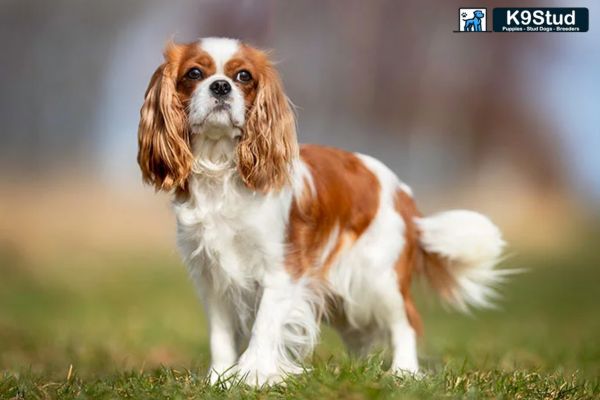
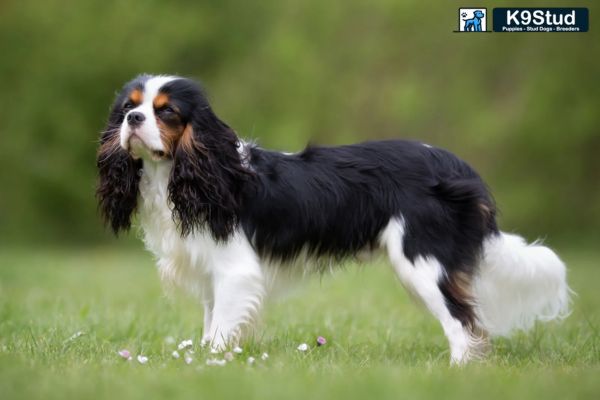
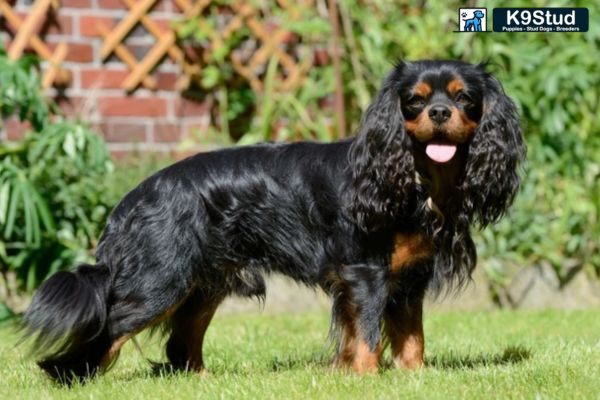
Temperament is the Cavalier's crowning virtue. These dogs are gentle, sweet-natured, and endlessly affectionate, blending genuine lapdog devotion with the cheerful, tail-wagging playfulness of their spaniel ancestry. They adore human company, get along beautifully with children and other pets, and make outstanding family companions and therapy dogs. Cavaliers come in four recognized colors: Blenheim (chestnut on white), tricolor (black and white with tan markings), black-and-tan, and the solid rich red known as ruby. Whatever the color, the coat is silky, moderately feathered, and framed by soft, expressive eyes.
Breed Characteristics
- Stamina Level: Moderate — happy to walk and play, then settle on your lap
- Grooming: Moderate; a silky, feathered coat that needs regular brushing to prevent mats
- Training Ease: Good — eager to please and highly food-motivated, though sensitive to harsh handling
- Size: Toy (13–18 lbs; 12–13 inches at the shoulder)
- Temperament: Gentle, affectionate, sociable, and eager for companionship
Care Requirements
Cavaliers are adaptable companions rather than high-octane athletes. A daily walk plus some play and training satisfies most of them, though the spaniel in their blood means they still enjoy sniffing, retrieving, and exploring a securely fenced yard. Because they were bred purely for companionship, they do not cope well with being left alone for long stretches and can become anxious or clingy without company. The silky coat needs brushing several times a week — with extra attention to the feathering on the ears, legs, and feet — along with routine ear cleaning, nail trims, and dental care.
Health is where prospective owners must do their homework. The Cavalier is affected by two serious hereditary conditions: mitral valve disease, an early-onset heart disorder that is extremely common in the breed, and syringomyelia, a painful neurological condition caused by a mismatch between skull and brain size. Buy only from breeders who cardiac-screen their dogs annually and MRI or health-test their breeding lines. The breed is also prone to hip dysplasia, several eye disorders, and episodic falling syndrome, so insist on documented screening from any breeder you consider.