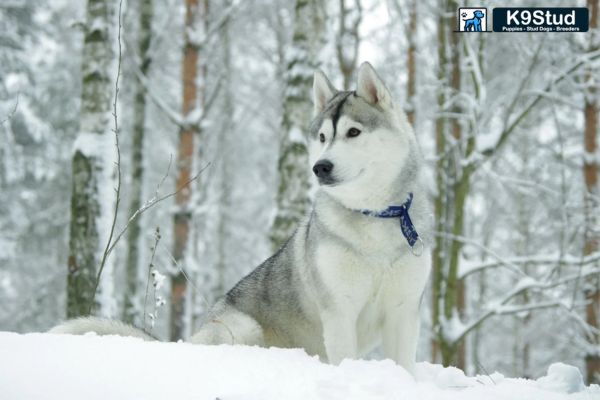
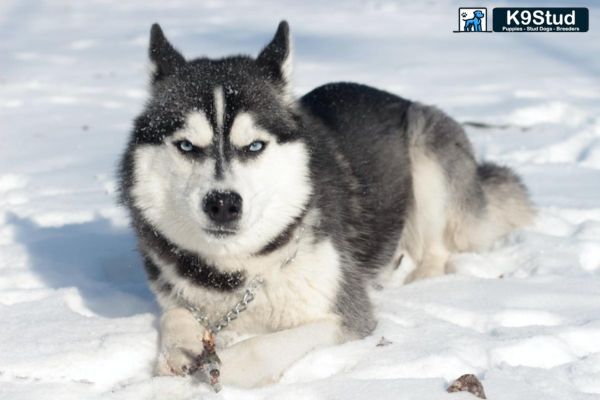
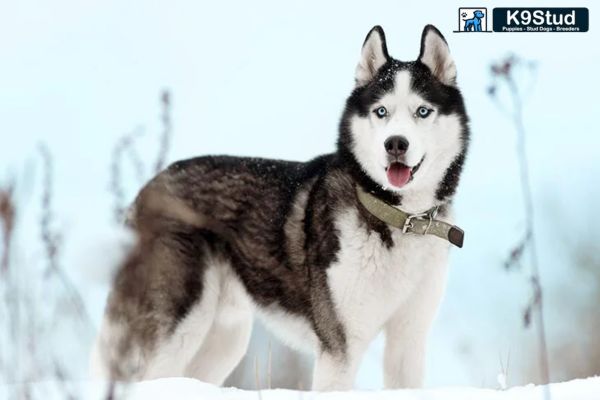
Siberian Husky
An athletic, affectionate sled dog built for distance — talkative, spirited, and never much of a guard dog.
About the Siberian Husky
The Siberian Husky was developed over thousands of years by the Chukchi people of northeastern Siberia, who needed a dog that could haul light loads across vast distances of frozen tundra on very little food. The result was a compact, tireless sled dog that lived closely alongside its human family, tolerated bitter cold, and worked cooperatively in a team. That heritage explains almost everything about the breed today: the endurance, the pack mentality, the friendliness toward people, and the deep instinct to run.
The breed reached Alaska in the early 1900s, where fur trader and racer imported these dogs to compete in long-distance sled events like the All-Alaska Sweepstakes. Their fame was sealed in 1925, when relay teams of sled dogs carried life-saving diphtheria antitoxin more than 600 miles through a brutal winter storm to the isolated town of Nome. Two dogs from that serum run — Balto, who led the final leg, and Togo, who covered the longest and most dangerous stretch — became national heroes and remain the most celebrated sled dogs in history.
In personality the modern Siberian Husky is outgoing, playful, and relentlessly social. Bred to live and work in large teams, it generally loves other dogs and treats visiting strangers as new friends rather than intruders. That easy friendliness makes the Husky a poor watchdog and a worse guard dog — it is far more likely to greet a burglar than to challenge one. Instead of barking, Huskies are famously vocal in other ways, howling, whining, and "talking" in a range of expressive sounds that owners either love or learn to live with.
Breed Characteristics
- Stamina Level: Extreme — a distance-running endurance athlete
- Grooming: Heavy; a thick double coat that sheds constantly and “blows” out completely twice a year
- Training Ease: Challenging — intelligent but independent and easily bored
- Size: Medium (35–60 lbs; 20–24 inches at the shoulder)
- Temperament: Friendly, energetic, pack-oriented, and mischievous
Care Requirements
Siberian Huskies were built to run for hours, and a bored, under-exercised Husky quickly becomes a destructive escape artist. Plan on at least an hour or two of hard daily exercise — running, hiking, canicross, or pulling sports — and never trust one off-leash in an open area. Their prey drive and roaming instinct are so strong that most Huskies will bolt after a squirrel or simply run for the horizon; a securely fenced yard with high fencing, sunk footings to stop digging, and no gaps is essential.
That plush double coat needs weekly brushing most of the year and daily attention during the twice-yearly "coat blow," when the entire undercoat sheds out in clumps. Never shave a Husky — the coat insulates against both cold and heat, and shaving can ruin its ability to regulate temperature. Because the breed is heat-sensitive, exercise in the cool of the morning or evening in warm climates and always provide shade and water. Buy from breeders who screen for hip dysplasia and eye conditions such as juvenile cataracts and progressive retinal atrophy (PRA).