French Bulldog
A compact, affectionate lapdog with bat ears and a big personality — bred purely for companionship.
About the French Bulldog
Despite the name, the French Bulldog began in England. Lace workers in Nottingham kept small, toy-sized bulldogs as lap companions, and when many of them relocated to northern France during the Industrial Revolution of the mid-1800s they brought these little dogs with them. In France the type was refined — likely crossed with local terriers and other small breeds — and the distinctive erect “bat ear” became fixed. The breed grew popular with Parisian shopkeepers and cafe society, earning the affectionate nickname “Frenchie,” before American fanciers embraced it and cemented the upright ears as the standard.
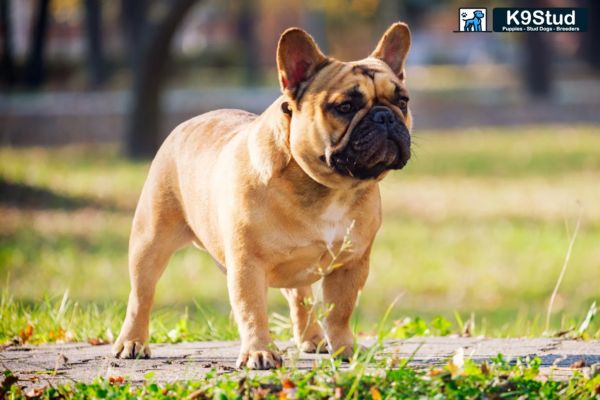
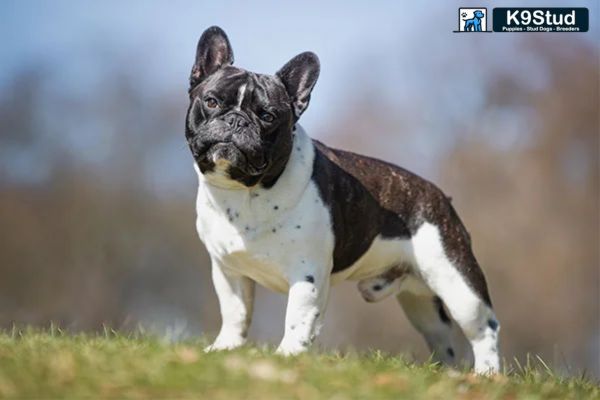
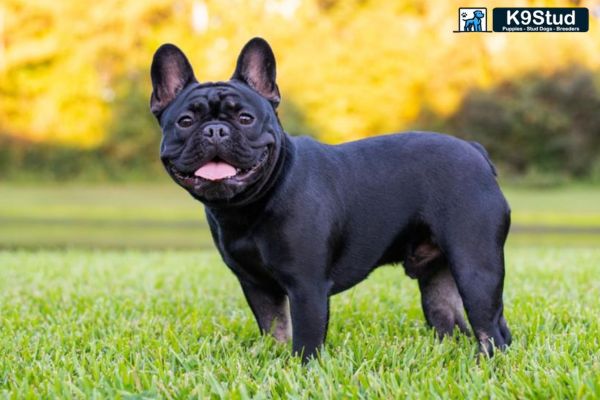
What defines the Frenchie is temperament, not athleticism. This is a dog bred for one job: keeping people company. They are affectionate, comical, and remarkably adaptable, thriving in apartments and small homes because they need very little space or exercise. They tend to bark far less than most small breeds and form intense attachments to their people, following them room to room. Physically they are unmistakable — a smooth, single-layer coat, a heavy-boned compact body, a short screw or straight tail, and a flat, wrinkled face with those signature ears.
Buyers should go in with clear eyes about what the flat face and compact build imply. The French Bulldog is one of the most expensive breeds to produce because reproduction almost always requires veterinary intervention: the narrow hips and large heads mean natural mating is difficult and most litters are conceived by artificial insemination and delivered by planned cesarean section. Those costs, plus limited litter sizes, are the honest reason a well-bred Frenchie carries a high price. A reputable breeder health-tests for breathing and spinal issues rather than chasing extreme “exotic” looks.
Breed Characteristics
- Stamina Level: Low — a companion, not an athlete; short bursts only
- Grooming: Easy coat, but the facial folds and ears need regular cleaning
- Training Ease: Moderate — smart and eager to please but can be stubborn; motivated by food
- Size: Small (16–28 lbs; about 11–13 inches at the shoulder)
- Temperament: Affectionate, playful, easygoing, and deeply people-oriented
Care Requirements
French Bulldogs need only modest exercise — a couple of short daily walks and some indoor play are plenty. The bigger risk is the opposite of overwork: because they burn so few calories and love their food, they gain weight easily, and extra pounds worsen both their breathing and their vulnerable spines. Keep them lean, and never exercise them in heat. As a brachycephalic (flat-faced) breed they cannot cool themselves efficiently and overheat dangerously fast, so walks belong in the cool parts of the day. Just as important, most Frenchies cannot swim: their dense build and short muzzle make them sink, and they should never be left unsupervised near a pool.
Coat care is genuinely simple — a weekly brush keeps the short coat tidy — but the skin does need attention. Wipe and dry the facial and nose folds regularly to prevent trapped moisture, yeast, and dermatitis, and clean the large ears to head off infections. Health-wise, plan for the breed's known issues: Brachycephalic Obstructive Airway Syndrome (BOAS), which causes the characteristic snorting and can require surgery; intervertebral disc disease (IVDD) and other spinal problems tied to their screw tails and stocky backs; plus allergies and eye conditions. Buying from a breeder who screens breathing and spines, and keeping your dog slim, are your best protections.