Rottweiler
A powerful, confident working guardian — calm at home, devoted to its people, and steady when it counts.
About the Rottweiler
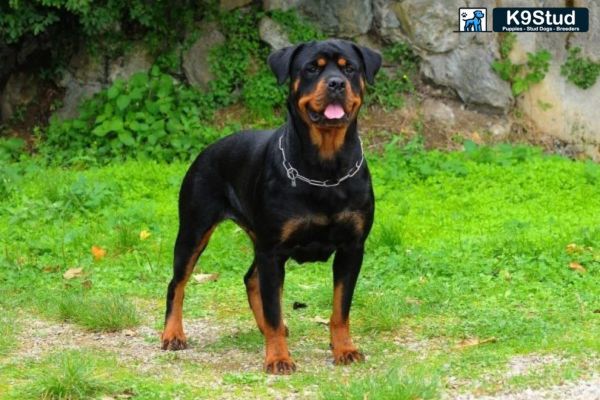
The Rottweiler is one of the oldest working breeds, with roots that reach back to the Roman Empire. As the legions marched north, they brought hardy mastiff-type drover dogs to move and guard the cattle that fed the army on the march. When the Romans settled a crossing point in what is now southern Germany, some of those dogs stayed behind. The town that grew up there became known as Rottweil, and the descendants of those Roman droving dogs became the “Rottweiler Metzgerhund” — the Rottweil butcher's dog.
For centuries the breed earned its keep in that market town. Butchers and cattle dealers relied on these dogs to drive herds to market, to pull carts loaded with meat, and to guard the day's takings — owners were said to tie their purse around the dog's neck for safekeeping. When rail transport replaced droving in the nineteenth century the breed nearly disappeared, but its intelligence and steadiness soon found new work in police and military service. Today the American Kennel Club places the Rottweiler in the Working Group, and it remains a favorite for protection, service, therapy, and search-and-rescue roles.
A good Rottweiler is calm, confident, and self-assured rather than nervous or hot-tempered. At home it is typically quiet and affectionate, often following its favorite people from room to room, yet it carries a natural, discerning wariness toward strangers that makes it a formidable family guardian. This is a large, strong dog with a strong will, and it is not the right choice for a passive or first-time owner. A Rottweiler needs someone who will lead with fair, consistent structure and give the dog a real place in family life. It is worth stressing that the breed is heavily stereotyped: a Rottweiler's temperament depends far more on how it was bred and raised than on the name of the breed.
Breed Characteristics
- Stamina Level: High — a robust working breed built for daily activity
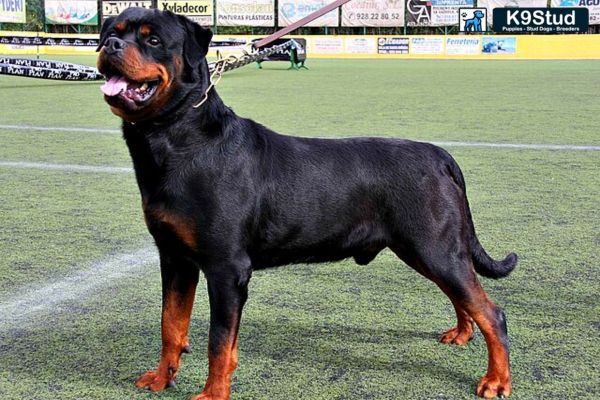
- Grooming: Low; a short black-and-mahogany double coat that is easy to maintain but does shed
- Training Ease: Highly trainable, but needs a confident, consistent handler
- Size: Large (80–135 lbs; 22–27 inches at the shoulder)
- Temperament: Loyal, calm, confident, and naturally protective
Care Requirements
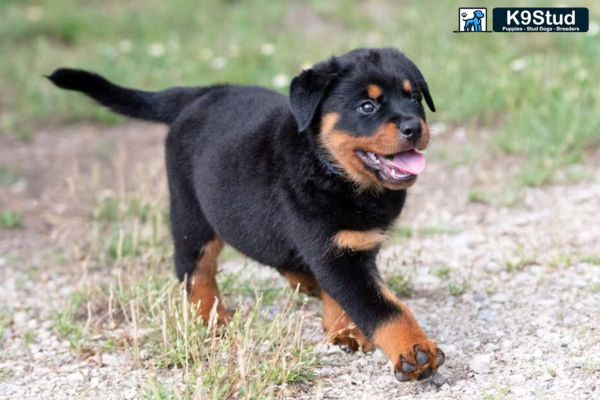
Rottweilers are working dogs and need a genuine outlet for their energy and their minds. Plan on real daily exercise — brisk walks, jogging, hiking, or play — along with a job to think about, whether that is obedience, cart-pulling, tracking, scent work, or the sport of Schutzhund/IGP. Just as important is early, consistent socialization and firm, positive, reward-based training that starts in puppyhood; a well-socialized Rottweiler is steady and discerning, while a bored or under-managed one can become pushy or overly territorial.
The short double coat is easy to care for — a weekly brushing keeps it healthy, with more frequent brushing during seasonal sheds — but it does leave hair around the home. On the health side, buy only from breeders who screen their stock. Ask for hip and elbow dysplasia clearances, cardiac evaluation for subaortic stenosis, and eye testing. The breed also carries a notable predisposition to osteosarcoma (bone cancer) and, like other deep-chested dogs, to bloat (gastric torsion), so feed measured meals, avoid hard exercise right after eating, and learn the warning signs.