Dachshund
A big-dog personality on short legs — bold, clever, and built to dig its way to a fight.
About the Dachshund
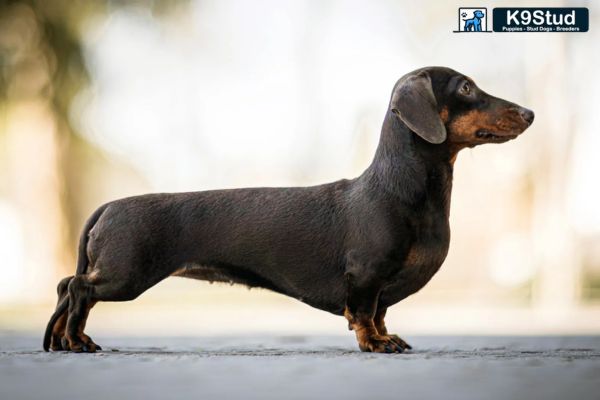
The Dachshund was developed in Germany several centuries ago as a working scent hound, and its very name spells out the job: Dachs (badger) plus Hund (dog), the “badger dog.” Breeders deliberately engineered the unmistakable silhouette — a long, muscular body carried low on short, powerful legs — so the dog could follow a badger, fox, or rabbit right down into its burrow and hold it at bay. The deep chest gave lung capacity for underground work, the paddle-shaped front feet were made for digging, and that famously loud, resonant bark helped hunters locate a dog working far below the surface.
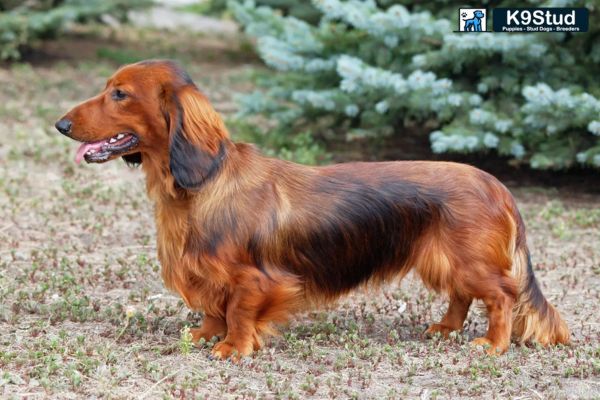
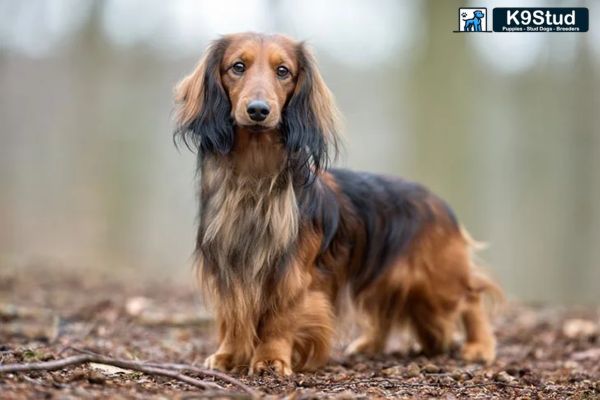
Over time the breed diversified into the varieties recognized today. There are three coat types — smooth (the classic sleek variety), longhaired (silky and slightly softer in temperament), and wirehaired (harsh-coated and bearded, with terrier in its background) — and two sizes, the standard and the smaller miniature. Standards were used on larger, tougher quarry like badger, while the nimble miniatures were favored for rabbit and other small game. Whatever the coat or size, the essential Dachshund character is the same throughout.
That character is a huge personality packed into a small frame. Dachshunds are bold, curious, and genuinely clever, but they were bred to work independently underground, out of sight of the hunter, so they also carry a well-earned reputation for stubbornness. They bond intensely with their people and are devoted, affectionate companions who often attach hardest to one favorite person. Add that surprisingly deep, carrying bark and an alert, suspicious streak toward strangers, and you have a compact but effective little watchdog who will announce every visitor.
Breed Characteristics
- Stamina Level: Moderate — surprisingly tireless on a scent, but content with modest daily exercise
- Grooming: Low to moderate; varies by coat — smooth is easy-care, wirehaired needs hand-stripping, longhaired needs regular brushing
- Training Ease: Challenging — smart but independent and stubborn; housetraining takes patience
- Size: Small (Standard 16–32 lbs; Miniature under 11 lbs; 5–9 inches at the shoulder)
- Temperament: Bold, curious, devoted, and vocal, with a strong prey and digging drive
Care Requirements
Dachshunds need daily walks and play to stay fit and mentally satisfied, but their exercise must be spine-smart. The single most important thing an owner can do is protect that long back: discourage jumping on and off furniture, block or ramp the stairs, use a harness rather than a neck collar, and always support both the chest and the rear when lifting. Keeping the dog lean is non-negotiable, because every extra pound loads the spine and the joints.
Grooming depends on the coat — a quick weekly wipe-down for smooths, regular brushing for longhairs, and periodic hand-stripping for wirehairs. Beyond coat care, watch for the breed's known health issues: intervertebral disc disease (IVDD) is by far the most serious, followed by patellar luxation and a strong tendency toward obesity. Buy from breeders who screen their stock, feed measured meals, keep nails trimmed, and give this scent-driven digger safe outlets so the yard and flowerbeds survive.