White Swiss Shepherd
The gentle, snow-white cousin of the German Shepherd — just as clever, but softer, friendlier, and built for family life.
About the White Swiss Shepherd
The White Swiss Shepherd — known in its homeland as the Berger Blanc Suisse — began not as a separate breed but as a color. White-coated German Shepherds appeared in the earliest days of the breed, but as the color fell out of favor in Germany and was eventually written out of the standard, dedicated breeders abroad kept these dogs alive. White German Shepherds exported to North America and later back to Europe formed the foundation stock, and Switzerland took up their cause. In 2003 the Fdration Cynologique Internationale (FCI) formally recognized the White Swiss Shepherd as a distinct breed, with Switzerland as the country of patronage.
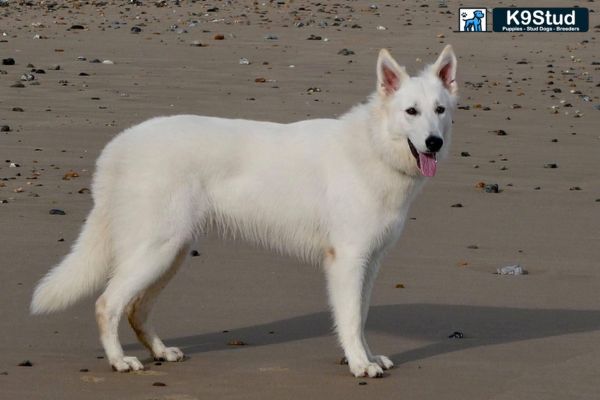
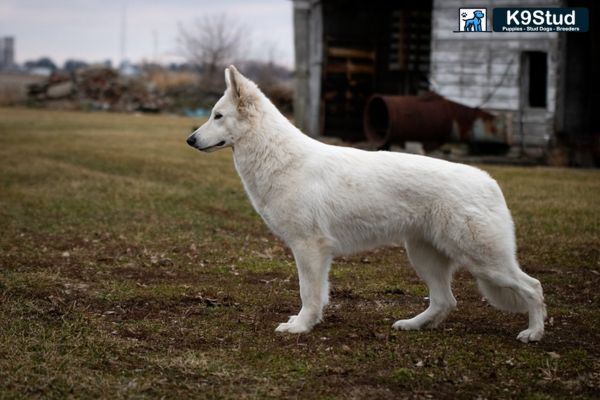
In build and brainpower, the White Swiss Shepherd is unmistakably a shepherd. It shares the German Shepherd's athletic, well-proportioned frame, its erect ears and alert expression, and the same quick, eager intelligence that makes training a genuine pleasure. What sets the breed apart is temperament. Generations of selection have produced a dog that is noticeably softer, more sensitive, and more openly affectionate — friendly and people-oriented rather than sharp or suspicious. Where the German Shepherd was refined as a hard protection and police dog, the White Swiss Shepherd leans firmly toward companion and family roles.
That gentler wiring is the breed's defining trait, and prospective owners should read it clearly. A White Swiss Shepherd will alert you to a stranger at the door, but it lacks the natural edge and defensive drive of a true protection dog, and it should never be expected to fill that job. Instead it thrives as a devoted household member, a capable partner in obedience, agility, tracking, and rally, and a sensitive companion that reads its people closely. It is also worth noting that this is a separate, FCI-defined breed and not the same as the American White Shepherd, which developed along its own path in North America.
Breed Characteristics
- Stamina Level: High — an active herding-descended dog that needs daily work
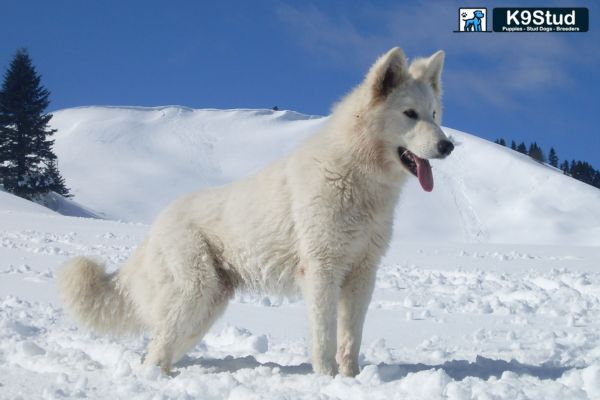
- Grooming: Moderate; a medium-to-long white double coat that sheds year-round and needs regular brushing
- Training Ease: Excellent — highly trainable, but sensitive and best taught with reward-based methods
- Size: Large (55–88 lbs; 21–26 inches at the shoulder)
- Temperament: Gentle, sensitive, friendly, and deeply people-oriented
Care Requirements
This is a working breed at heart, and it needs both body and mind engaged every day. Plan on at least an hour of real activity — brisk walks, hiking, fetch, or off-leash running — alongside mental work such as obedience, scent games, or a dog sport like agility or tracking. Because the breed is so sensitive and bonds tightly to its people, it does poorly left alone for long stretches and can become anxious or restless without enough company and stimulation.
The striking white double coat sheds throughout the year and blows more heavily in spring and fall, so brush a few times weekly (daily during the seasonal sheds) to keep loose hair and the undercoat in check. On the health front, screening mirrors the German Shepherd's: reputable breeders provide hip and elbow dysplasia clearances and watch for eye conditions, though careful, health-focused breeding has favored sounder structure. Buy from breeders who health-test their stock, keep your dog lean, and stay current on routine veterinary care.