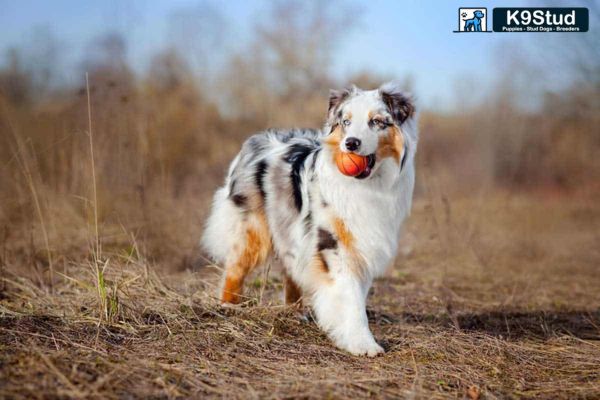
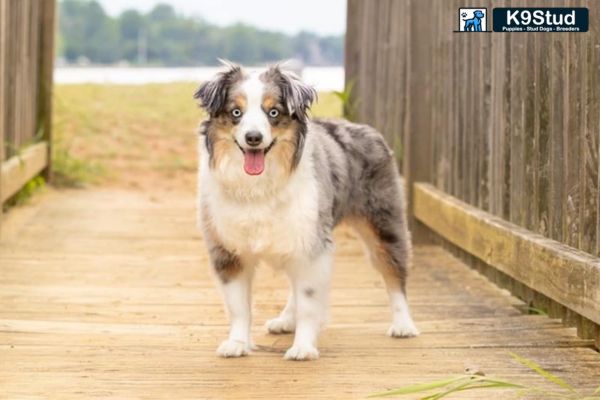
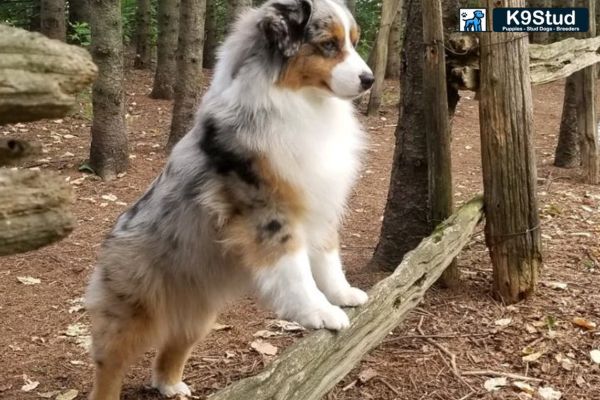
Miniature Australian Shepherd
A pocket-sized herding dynamo — the brains and drive of an Aussie in a compact, family-ready package.
About the Miniature Australian Shepherd
The Miniature Australian Shepherd is exactly what its name suggests: a scaled-down version of the standard Australian Shepherd, selectively bred from the smallest Aussies to preserve the herding breed's looks, intellect, and work ethic in a smaller frame. Breeders in California began the project in the 1960s and 1970s, and the type gained a devoted following among riders and ranch families who wanted a capable herder that traveled easily. In 2015 the American Kennel Club granted full recognition under the name Miniature American Shepherd, yet most owners, breeders, and enthusiasts still call the dog by its original and better-known name, the Mini Aussie.
Despite the “Australian” label and its very American development, the breed's roots are neither Australian nor purely American. The Australian Shepherd descends from European herding dogs — most notably the shepherd dogs of the Basque people, who brought their stock through Australia and on to the western United States. It was on American ranches, in the hands of cowboys and sheep herders, that the Aussie was truly refined into the driving, gathering stockdog we know today. The Miniature Australian Shepherd carries that entire heritage forward, simply in a body that fits more easily into a modern home and vehicle.
Make no mistake about temperament: this is a highly intelligent, energetic, and remarkably biddable herding dog, not a decorative lap companion. Mini Aussies learn quickly, read their people closely, and thrive on having a genuine job — whether that is agility, herding trials, flyball, dock diving, or simply structured daily training. Without enough physical exercise and mental stimulation, that same brilliant, busy mind turns to boredom, and a bored Mini Aussie will invent its own entertainment through barking, digging, nipping, or destruction. Given the right outlet, however, few dogs are more eager, loyal, or fun to work with.
Breed Characteristics
- Stamina Level: High — a tireless little herder that keeps going all day
- Grooming: Moderate; a medium double coat that sheds and needs regular brushing
- Training Ease: Excellent — quick, eager, and highly biddable
- Size: Small to medium (roughly 20–40 lbs; 13–18 inches at the shoulder)
- Temperament: Bright, devoted, energetic, and closely bonded to family
Care Requirements
A Mini Aussie needs a real job and daily exercise to be happy. Plan on at least an hour of active movement — brisk walks, fetch, hiking, or running alongside a bike — layered with mental work such as obedience drills, trick training, puzzle feeders, or a dog sport. This is a devoted family dog, but a demanding one; the household that treats it as a low-energy pet will end up with a frustrated, mischievous, and often destructive companion. Early socialization helps temper the breed's natural wariness of strangers and its instinct to herd children and other pets.
The medium-length double coat sheds steadily and blows more heavily with the seasons, so brush it a couple of times a week to control loose hair and prevent matting behind the ears and legs. Beyond routine care, insist on health-screened parents: reputable breeders test hips, examine eyes for Collie eye anomaly, progressive retinal atrophy (PRA), and cataracts, and — critically — check for the MDR1 gene mutation, which causes dangerous sensitivity to certain common medications. Always ask a breeder for proof of MDR1 testing and share the result with your veterinarian.