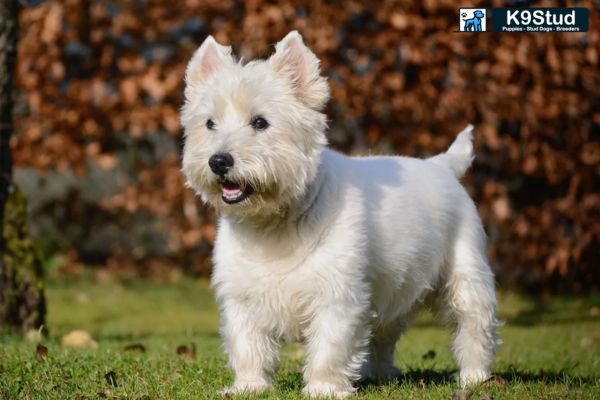
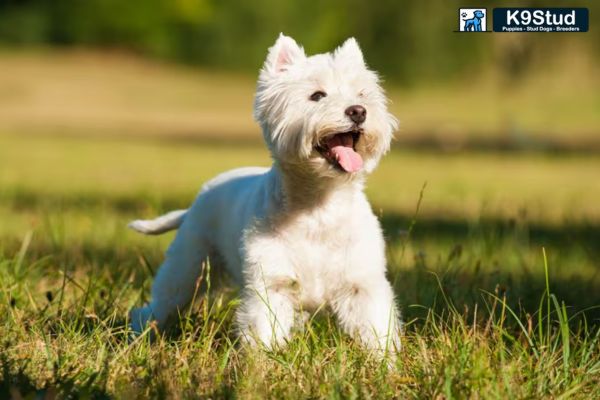
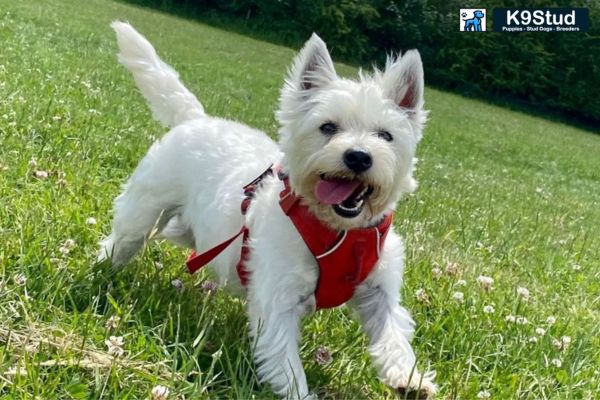
West Highland White Terrier
A bright-eyed, all-white Scottish terrier — bold, sturdy, and brimming with big-dog personality.
About the West Highland White Terrier
The West Highland White Terrier — the “Westie” — is a small, game earth dog developed in the western Highlands of Scotland to bolt and dispatch vermin. Rats, foxes, badgers, and other burrowing pests were the working terrier’s quarry, and these compact, short-legged dogs were built to squeeze into rocky dens and cairns after them. The breed shares its roots with the other Scottish terriers of the region, and tradition holds that the distinctive pure-white coat was deliberately fixed so a handler could tell dog from quarry and spot his terrier against dark earth, heather, and rock rather than mistaking it for a fox at the wrong moment.
For all that working heritage, the Westie is one of the most sociable and outgoing members of the terrier family. It is a confident, hardy little dog with a friendly, self-assured air — more people-oriented and less scrappy than some of its terrier cousins, yet still every inch a terrier underneath. That means a strong prey drive, a genuine love of digging, an alert bark, and an independent streak that likes to make its own decisions. Westies are curious, busy, and comically self-important, and they carry themselves as though they are far larger than their roughly eleven-inch frame suggests.
Today the breed is prized far more as a companion than a ratter, and it adapts happily to apartments, family homes, and city or country life alike. A well-socialised Westie is a cheerful, adaptable housemate that enjoys being in the thick of family activity. Prospective owners should simply keep the terrier instincts in mind: a securely fenced garden, an eye on small pets, and consistent, upbeat training all help channel that spirited nature into good manners rather than mischief.
Breed Characteristics
- Stamina Level: Good — a hardy little dog with plenty of energy for its size
- Grooming: Moderate to high; a harsh white double coat needing regular brushing plus hand-stripping or clipping
- Training Ease: Moderate — clever and eager but independent, so reward-based consistency pays off
- Size: Small (15–20 lbs; about 10–11 inches at the shoulder)
- Temperament: Confident, friendly, spirited, alert, and full of terrier character
Care Requirements
Westies are small but far from sedentary. Plan on a couple of good walks a day plus some active play, and add mental engagement — food puzzles, short training games, or a safe outlet for digging and sniffing — to satisfy that inquisitive terrier brain. An under-stimulated Westie will happily entertain itself by barking, digging, or excavating your flower beds, so daily exercise and a job to think about keep it content.
The signature white double coat is harsh and weather-resistant over a soft undercoat, and it needs regular brushing several times a week to prevent mats and keep it clean. Show and traditional grooming calls for hand-stripping to preserve the coat’s correct hard texture, while many pet owners choose clipping for convenience, accepting a softer coat. Buy from breeders who screen their stock, as the breed is prone to skin allergies (atopic dermatitis is common), luxating patella, Legg-Calve-Perthes disease, craniomandibular osteopathy (“Westie jaw”), and deafness. Kept lean and well cared for, the Westie is generally a hardy, long-lived companion.