Bull Terrier
The clown of the dog world — instantly recognized by its egg-shaped head and boundless, mischievous energy.
About the Bull Terrier
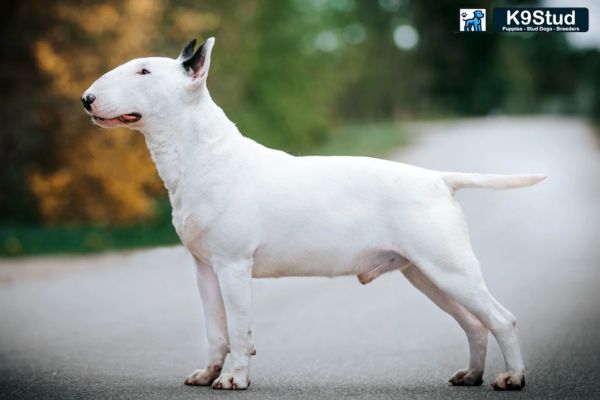
The Bull Terrier is an English bull-and-terrier breed, created in the early-to-mid 1800s by crossing the old Bulldog with terriers to combine the courage of one with the agility of the other. In 1860 a Birmingham dog dealer named James Hinks refined the type into the sleek, all-white dog he called the “White Cavalier,” deliberately breeding away from the pit and toward a stylish gentleman's companion. Colored varieties were later added, and today the breed is prized far more as an affectionate family dog than for any of its fighting-ancestry roots.
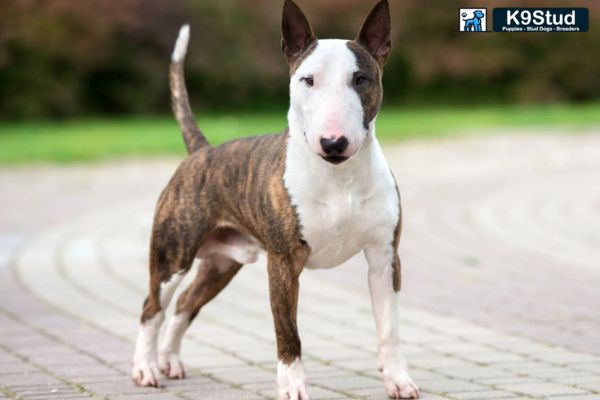
Nothing else looks like a Bull Terrier. The breed is defined by its unique egg-shaped, or ovoid, head — a smooth, downward-curving profile with no stop — set off by small, deep-set, triangular eyes that give it a keen, almost comical expression. Beneath that famous head sits a compact, powerfully muscled body built like a canine athlete. It is one of the most instantly recognizable of all purebred dogs, and the head is the single most distinctive feature the breed standard demands.
Temperament is where the Bull Terrier truly wins hearts. Playful, exuberant, and endlessly mischievous, it is often described as a “three-year-old child in a dog suit” — comical, headstrong, and always looking for fun. Bull Terriers are deeply affectionate and bond intensely with their people, thriving on company and physical closeness. That same devotion makes them stubborn and a bit clownish to train, so they reward owners who bring patience, humor, and consistency rather than harshness.
Breed Characteristics
- Stamina Level: High — a muscular, athletic dog that needs real daily exercise
- Grooming: Very low; a short, flat, harsh coat that needs only a weekly once-over
- Training Ease: Moderate — smart but stubborn, and easily bored by repetition
- Size: Medium (45–70 lbs; 21–22 inches at the shoulder)
- Temperament: Playful, mischievous, exuberant, and fiercely devoted to its family
Care Requirements
Bull Terriers are lively, powerful dogs that need plenty of exercise, training, and above all companionship. Plan on at least an hour of activity a day — brisk walks, play, and games that engage their busy minds. What they cannot tolerate is being left alone: a bored or lonely Bull Terrier will chew, dig, and dismantle a home in short order, so this is a breed that must live indoors as part of the family, not out in a kennel.
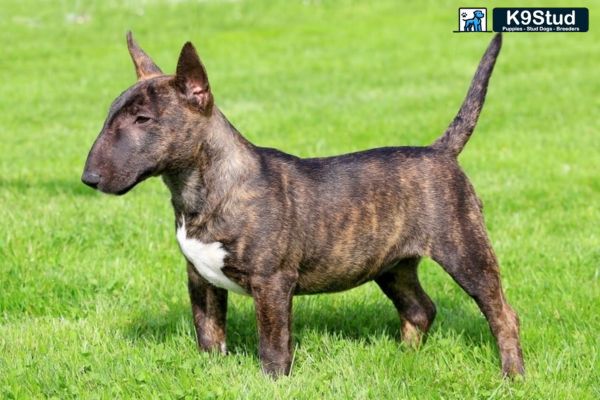
Grooming, at least, is refreshingly easy. The short, flat coat — pure white or colored — needs only a weekly brush and the occasional bath. Health screening matters more: buy from breeders who BAER-test for deafness (common in white dogs), and who screen for heart disease (mitral valve and aortic problems) and hereditary kidney disease, for which a urine protein-to-creatinine screening test exists. Watch also for skin allergies and the breed's odd tendency toward obsessive tail-chasing.