Pug
A big personality in a small package — comical, affectionate, and endlessly devoted to its people.
About the Pug
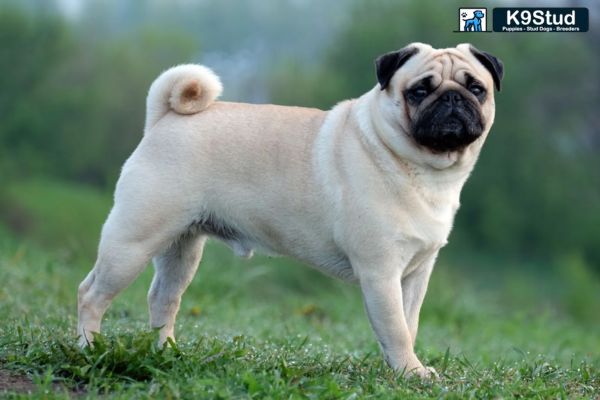
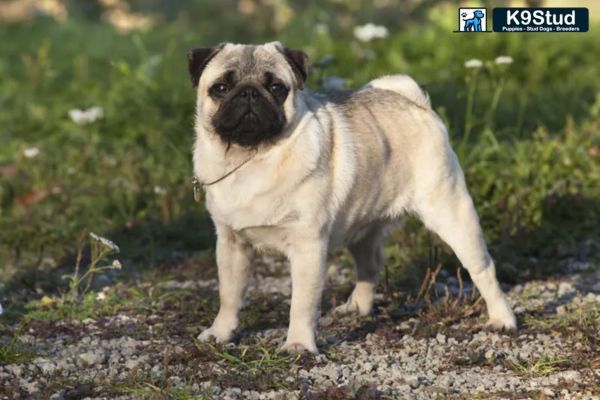
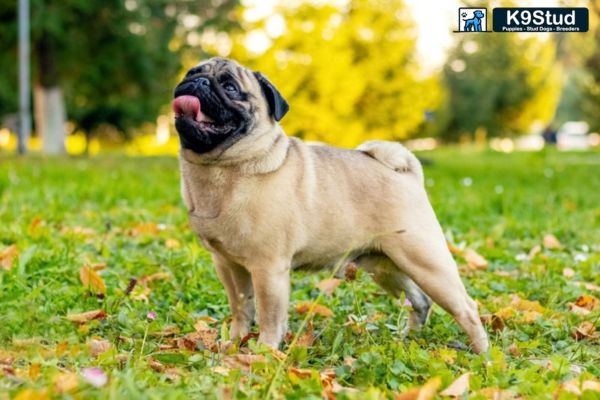
The Pug is one of the oldest dog breeds in existence, tracing back more than two thousand years to ancient China, where flat-faced companion dogs were prized by the ruling class. Emperors kept Pugs as pampered lapdogs, housed them in luxury, and in some cases assigned them their own guards. From the imperial court the breed traveled along trade routes into Europe, where it quickly found new admirers among royalty — the Pug famously became the official dog of the House of Orange in Holland and later a fixture in the courts and drawing rooms of England and France. Everywhere it went, the Pug earned its keep not by working but simply by being wonderful company.
Breeders and fanciers have long summed up the Pug with a Latin motto: “multum in parvo,” meaning “a lot of dog in a small space.” It is a fitting description. Beneath that compact, sturdy little body sits an outsized personality — charming, mischievous, and thoroughly convinced that it is the center of the household. Pugs are natural comedians who seem to delight in making their people laugh, and they will happily clown around for attention one minute and curl up in a warm lap the next. Above all they are affectionate: this is a breed that lives for human company and genuinely does not do well being left alone for long stretches.
That people-first nature makes the Pug an excellent family dog. They are patient and playful with children, sociable with other pets, and adaptable enough to be content in a city apartment or a country home so long as their family is nearby. Pugs are not demanding athletes or high-drive workers; what they crave is togetherness, attention, and a comfortable spot beside you. For anyone seeking an easygoing companion with a huge heart and a sense of humor to match, few breeds deliver quite like the Pug.
Breed Characteristics
- Stamina Level: Low — a companion, not an endurance dog, and easily overheated
- Grooming: Moderate; the short double coat sheds a surprising amount, plus regular wrinkle cleaning
- Training Ease: Moderate — smart and eager to please but can be stubborn; food-motivated
- Size: Small (14–18 lbs; 10–13 inches at the shoulder)
- Temperament: Charming, mischievous, affectionate, and devoted to its family
Care Requirements
Pugs have modest exercise needs — a couple of short daily walks and some indoor play are plenty. This is where honesty matters most: the Pug is a brachycephalic (flat-faced) breed, and that adorable squashed muzzle comes at a real cost. Many Pugs struggle to breathe efficiently (a condition called Brachycephalic Obstructive Airway Syndrome, or BOAS) and are dangerously intolerant of heat. Never over-exercise a Pug, never let one exert itself in warm weather, and never leave one in a hot car or unshaded yard, even briefly — heatstroke can be fatal. Watch closely for heavy panting or labored breathing and stop activity at once.
Grooming is straightforward but ongoing. That short double coat sheds far more than newcomers expect, so brush weekly to keep loose hair down. The facial wrinkles must be wiped clean and kept dry to prevent infection, and the Pug's large, prominent eyes need protection: they are easily scratched or injured and, in severe cases, can even pop out of the socket (proptosis). Pugs also gain weight readily, and obesity worsens their breathing and joint problems, so measure meals carefully. Buy from breeders who screen for hip issues and Pug Dog Encephalitis, and keep your dog lean, cool, and comfortable.