Mastiff
One of the world’s heaviest dogs — a calm, dignified “gentle giant” with centuries of guarding in its blood.
About the Mastiff
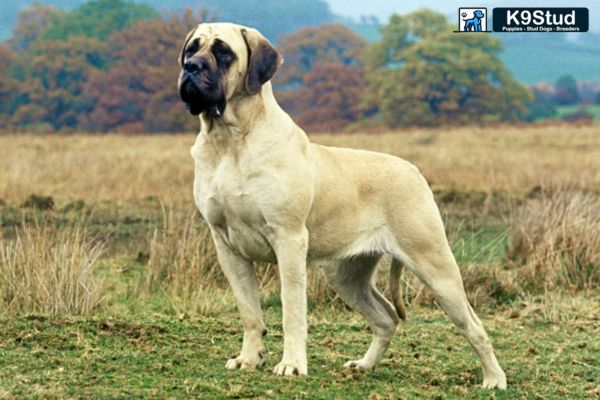
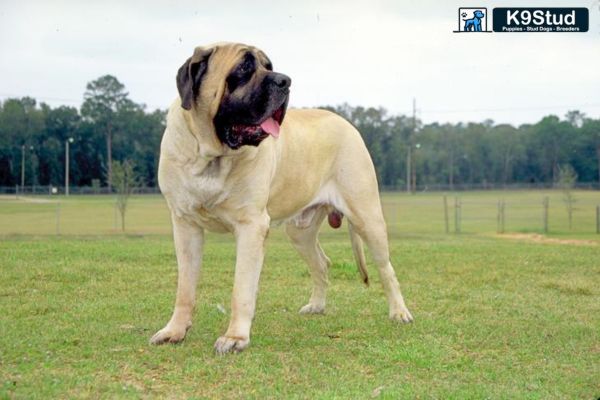
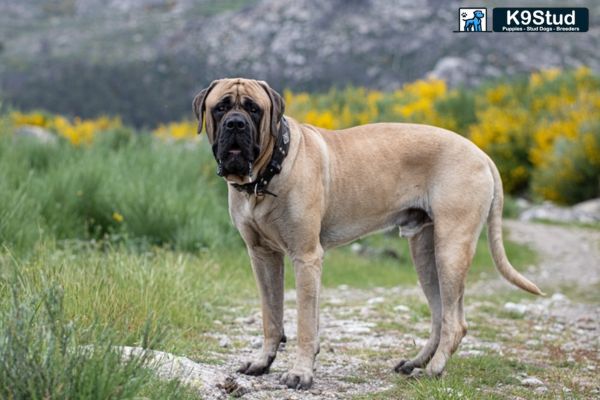
The Mastiff — known more precisely as the English Mastiff — is one of the most ancient of all dog types, with mastiff-like guardians appearing in art and writing from the classical world onward. In England the breed took its enduring shape over many centuries as an estate and property guardian, a role that also saw its ancestors used in war and as fearsome watchdogs on great country estates. What survived into the modern breed, however, is not the ferocity of that history but the size and the steadiness: a dog bred to stand its ground and warn off intruders through sheer imposing presence rather than to attack.
Size is the first thing anyone notices. The Mastiff is among the very heaviest dog breeds in the world, with males often weighing between 160 and 230 pounds and standing 30 inches or more at the shoulder. Yet for all that bulk, the breed’s defining quality is temperament. A well-bred Mastiff is calm, dignified, and famously docile — the original “gentle giant.” It is deeply devoted to its family and naturally protective, but a sound Mastiff is not aggressive or reactive; its guarding instinct is expressed as watchful, self-assured composure rather than noise or aggression.
That easygoing nature makes the Mastiff a wonderful companion for people who understand what they are taking on. This is a low-energy dog indoors that is content to sprawl at your feet, but it is still a giant with enormous strength, and it needs an owner prepared for the practical realities: the space a 200-pound dog requires, the drool and the snoring that come with those heavy jowls, and the sobering fact that giant breeds live short lives. Prospective owners should go in clear-eyed about both the joys and the responsibilities of sharing a home with so much dog.
Breed Characteristics
- Stamina Level: Low to moderate — a calm dog that needs only measured exercise
- Grooming: Low; a short, dense coat that is easy to maintain, though the breed drools and sheds moderately
- Training Ease: Moderate — intelligent and willing but sensitive, and its strength demands early work
- Size: Giant (males often 160–230 lbs; 27–32 inches at the shoulder)
- Temperament: Calm, dignified, docile, devoted, and naturally protective
Care Requirements
The Mastiff’s short coat is one of the easiest to look after — a weekly brush keeps shedding in check and the coat healthy. The real daily work is different: keeping the facial folds and jowls clean, wiping away drool, and managing a dog whose exercise must stay moderate. A couple of relaxed walks a day suit an adult Mastiff perfectly. Because the breed is so large and prone to overheating, avoid strenuous activity, and never push a growing puppy, whose joints are still forming.
Diet and growth are the make-or-break of raising a healthy Mastiff. Puppies must be kept on a large- or giant-breed formula that promotes slow, controlled growth — rushing weight onto immature joints is a leading cause of dysplasia. Be honest about the breed’s health profile: hip and elbow dysplasia, bloat (GDV), heart disease such as cardiomyopathy, eye conditions like entropion, and a real sensitivity to anesthesia are all concerns, and the lifespan is short at roughly 6 to 10 years. Buy from breeders who screen hips, elbows, hearts, and eyes, and feed measured meals to avoid bloat.