Bullmastiff
A powerful yet gentle English guardian — calm, devoted, and quietly courageous.
About the Bullmastiff
The Bullmastiff was forged for a very specific job. On the vast game estates of 19th-century England, gamekeepers were locked in a running battle with poachers, and they needed a dog that could do more than bark. By crossing the massive English Mastiff with the fierce, tenacious Old English Bulldog — roughly a 60 percent Mastiff to 40 percent Bulldog blend — breeders produced the “gamekeeper’s night dog.” This was a fast, powerful, and near-silent guardian trained to track an intruder across the grounds in the dark, then knock him down and hold him without biting, pinning the poacher until the keeper arrived.
That heritage explains everything about the modern Bullmastiff’s character. The breed was deliberately selected to be a controlled protector rather than an attack dog, and the result is a large, imposing animal with a surprisingly calm and even temper. At home the Bullmastiff is devoted, affectionate, and famously fond of its people, often convinced it is a lapdog despite tipping the scales well past a hundred pounds. Its protectiveness is instinctive and reliable, but it is not needlessly aggressive; a stable Bullmastiff sizes up a situation quietly and acts only when it truly needs to.
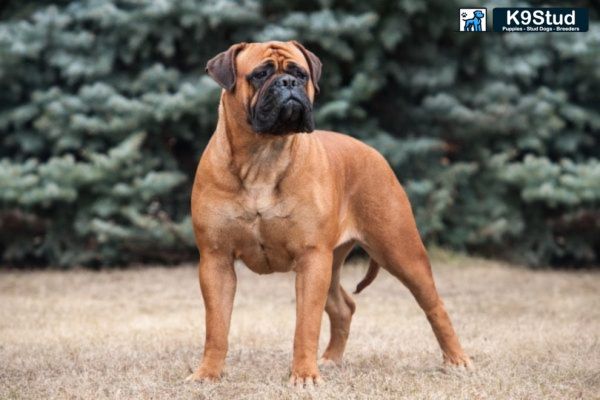
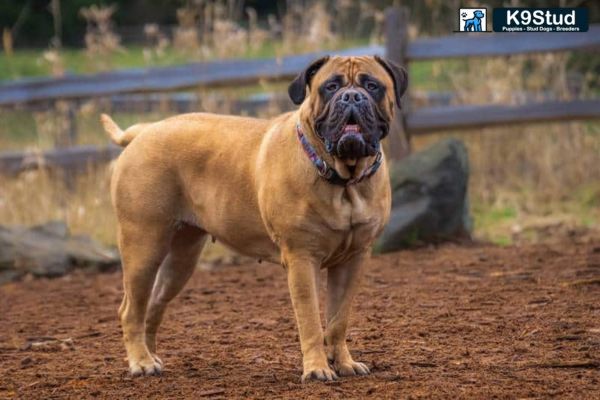
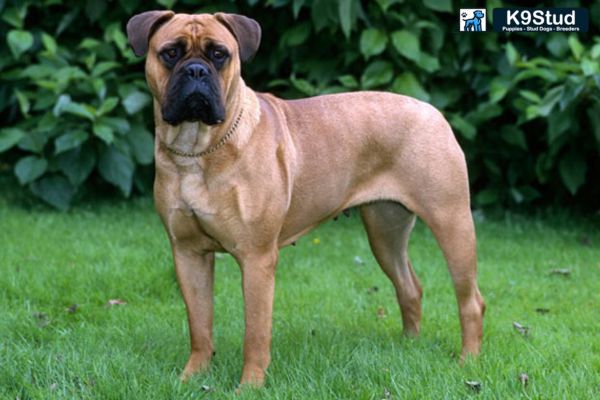
The Kennel Club in England recognized the Bullmastiff as a distinct breed in 1924, and the American Kennel Club followed in 1934. Today the breed carries the same short, dense coat it wore on those old estates — seen in fawn, red, or brindle, and always finished with the trademark dark mask across the muzzle and around the eyes. Prospective owners should know they are taking on a lot of dog: a heavy, strong, headstrong companion whose gentle nature only shines through with the early structure and socialization the breed’s size demands.
Breed Characteristics
- Stamina Level: Moderate — a powerful sprinter, not a distance athlete
- Grooming: Low; a short coat needs little more than a weekly once-over, but the breed drools and snores
- Training Ease: Moderate — intelligent but independent, so early consistency is essential
- Size: Large (100–130 lbs; 24–27 inches at the shoulder)
- Temperament: Calm, devoted, naturally protective, and gentle with family
Care Requirements
Despite its power, the Bullmastiff is a moderate-energy breed. A couple of daily walks and some easy play are usually enough to keep an adult content and fit; this is not a dog that needs miles of running, and over-exercising a growing puppy can damage developing joints. Because the shortened muzzle limits its ability to cool itself, the Bullmastiff is genuinely heat-sensitive — keep exercise to the cooler parts of the day, provide shade and fresh water, and never leave one in a warm car or an unventilated space.
Grooming is simple: a weekly brush keeps the short coat healthy, though you should be ready for shedding, plenty of drool, and enthusiastic snoring. The harder part is health. Bullmastiffs are prone to hip and elbow dysplasia, bloat (gastric torsion), several cancers including lymphoma and mast cell tumors, heart conditions such as subaortic stenosis, and eyelid problems like entropion. Paired with a naturally short lifespan of roughly seven to nine years, this makes buying from a breeder who screens hips, elbows, heart, and eyes absolutely essential. Feed measured meals, keep your dog lean, and avoid hard activity right after eating to reduce the risk of bloat.