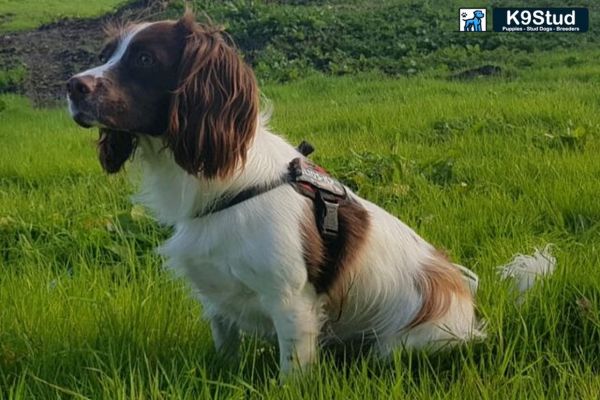
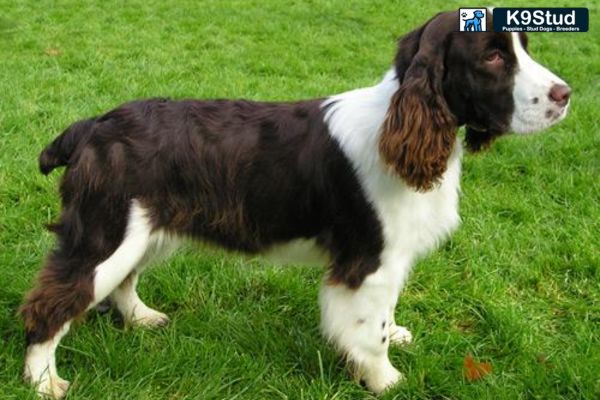
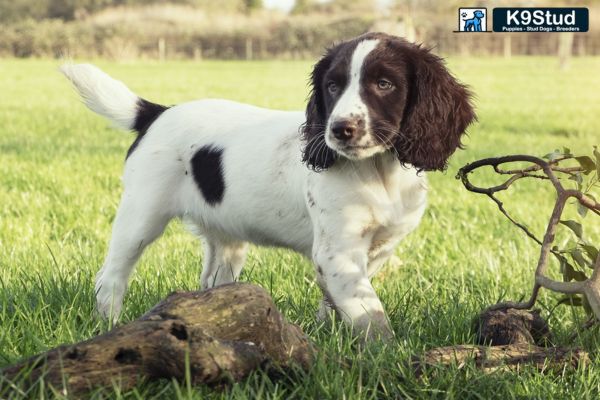
English Springer Spaniel
A tireless British flushing gundog — joyful, devoted, and always ready for the next adventure.
About the English Springer Spaniel
The English Springer Spaniel is one of the oldest of the British land spaniels, developed over centuries to work alongside hunters on foot. Its very name describes its job: before firearms were common, these dogs would dash into cover and “spring” — flush — birds and game into the open so they could be taken by hawk, net, or gun. Formally recognized as a distinct breed in England in the early twentieth century, the Springer became the wellspring from which several other spaniel breeds were separated, and it remains a benchmark for what a versatile flushing-and-retrieving gundog should be.
Temperament is where the Springer truly shines. Affectionate, cheerful, and famously eager to please, it forms fast, deep attachments to its people and wants nothing more than to be part of whatever the family is doing. That soft, biddable nature makes it highly trainable and a natural fit for active households, while its sociability means it usually greets strangers and other dogs as friends rather than threats. This is an energetic, medium-sized dog with a working engine under the hood: give it a job and companionship and it is one of the most rewarding breeds a hunter or an active family can own.
Prospective owners should know the breed has split into two fairly distinct types. Field-bred Springers are lighter, leggier, and shorter-coated, carrying the high drive and stamina prized by hunters and field-trial competitors. Show or bench-bred Springers are heavier-boned with a more profuse coat and a somewhat calmer disposition suited to conformation rings and family life. Neither is a couch dog, but matching the line to your lifestyle — serious hunting versus active companion — makes a real difference to how happy both of you will be.
Breed Characteristics
- Stamina Level: Very high — a working gundog built to hunt all day
- Grooming: Moderate to high; a medium double coat with feathering that needs regular brushing, trimming, and diligent ear care
- Training Ease: Excellent — soft, biddable, and eager to please
- Size: Medium (40–53 lbs; 19–20 inches at the shoulder)
- Temperament: Affectionate, energetic, sociable, and people-oriented
Care Requirements
Springers are athletes and need substantial daily exercise — think a solid hour or more of running, hiking, fetch, swimming, or field work, plus mental games to satisfy that busy hunting brain. A Springer that is under-exercised or left alone too long can become bored, anxious, and destructive; this is a breed that is genuinely happiest with company and a purpose, not one to leave in an empty yard.
The medium double coat with its feathering needs brushing several times a week and periodic trimming to stay tidy and free of mats. Pay special attention to the long, drop ears: because they hang down and trap moisture, they are prone to infections and need routine cleaning and drying, especially after swimming. Buy from breeders who screen for hip dysplasia and eye conditions such as progressive retinal atrophy (PRA), ask about recurring ear problems, and be aware that a rare inherited aggression disorder known as “rage syndrome” has appeared in some show lines — reputable breeders work hard to avoid it.