Doberman Pinscher
Sleek, brilliant, and fiercely devoted — an elegant guardian that lives for its people.
About the Doberman Pinscher
The Doberman Pinscher is a relatively young breed, developed in the 1890s in Apolda, Germany, by a tax collector named Karl Friedrich Louis Dobermann. His job took him through rough neighborhoods carrying money, and he wanted a medium-to-large dog that would walk at his side as a capable, imposing protector. Because Dobermann also ran the local dog pound, he had unusual access to a wide range of dogs, and he blended several types — thought to include early pinschers, rottweilers, and herding stock — into a sharp, courageous guardian. Later breeders refined his rough prototype into the sleek, elegant, athletic dog recognized today.
Few breeds combine brains and drive the way the Doberman does. It consistently ranks among the top five dogs for working intelligence, learning commands quickly and retaining them for life, which is why it has excelled in police, military, service, and protection roles for more than a century. Beneath that working reputation, though, is a deeply affectionate companion. The Doberman is famously a “velcro dog” — it bonds intensely with its household and wants to be wherever its people are. This is not a breed suited to living isolated in a backyard; a Doberman kept apart from its family becomes anxious, bored, and unhappy.
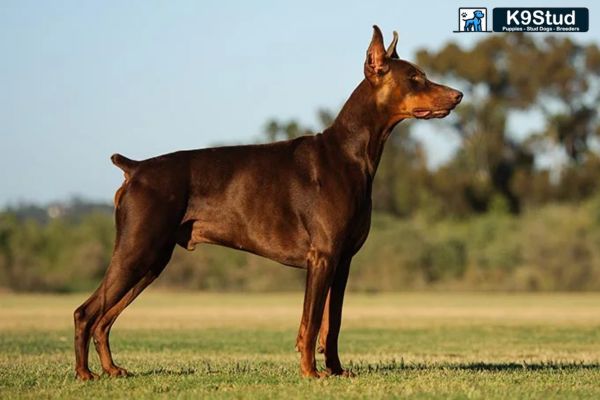
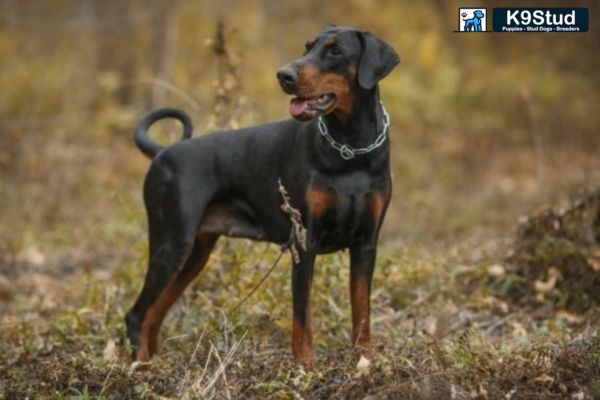
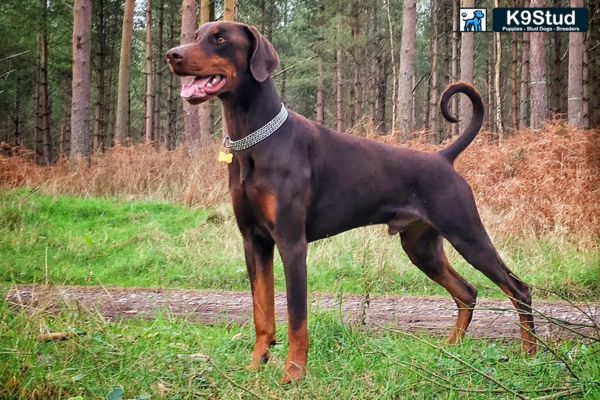
Many people still picture the Doberman with cropped, upright ears and a docked tail, but those features are purely cosmetic. Ear cropping and tail docking are increasingly falling out of favor, and both practices are banned or restricted in much of Europe, Australia, and beyond. A Doberman with natural floppy ears and a full tail is exactly the same dog in temperament and ability — the traditional look is a human choice, not a breed necessity. Prospective owners should feel entirely comfortable choosing the natural, uncropped appearance.
Breed Characteristics
- Stamina Level: High — an athletic working dog that needs real daily exercise
- Grooming: Very low; a short, smooth coat that sheds minimally and needs little more than a weekly wipe-down
- Training Ease: Exceptional — among the most intelligent and trainable of all breeds
- Size: Large (60–100 lbs; 24–28 inches at the shoulder)
- Temperament: Loyal, alert, intelligent, and intensely people-bonded
Care Requirements
Dobermans are powerful, energetic athletes that need substantial daily exercise paired with genuine mental work. Plan on at least an hour of vigorous activity — brisk walks, running, fetch, or a canine sport such as obedience, agility, or protection training — along with puzzle games and training sessions that keep that fast mind occupied. A well-exercised Doberman is calm and settled indoors; an under-stimulated one grows restless and destructive.
The short, smooth coat is about as low-maintenance as it gets, needing only occasional brushing and rare baths, but it offers almost no insulation. Dobermans are thin-coated and do not tolerate cold well, so they need a warm home and a coat in winter weather — they are strictly indoor dogs. Health is the single most important consideration in this breed: buy only from breeders who perform annual cardiac screening (Holter monitor and echocardiogram) and DNA testing, and keep up with your veterinarian on cardiac and orthopedic monitoring throughout your dog's life.